
GPT-6 Astra: What Its Launch Means for the Future of AI
On September 3, 2026, OpenAI released a model and immediately said the word nobody in this industry says lightly. President Greg Brockman called GPT-6 Astra a generational leap and suggested it could eventually be seen as the arrival of AGI. Axios ran the story under a headline that read like something out of a press release from the future: welcome to the AGI era.
That is a big claim to put your name on. So what did OpenAI actually ship, and does the claim hold up?
What is actually new
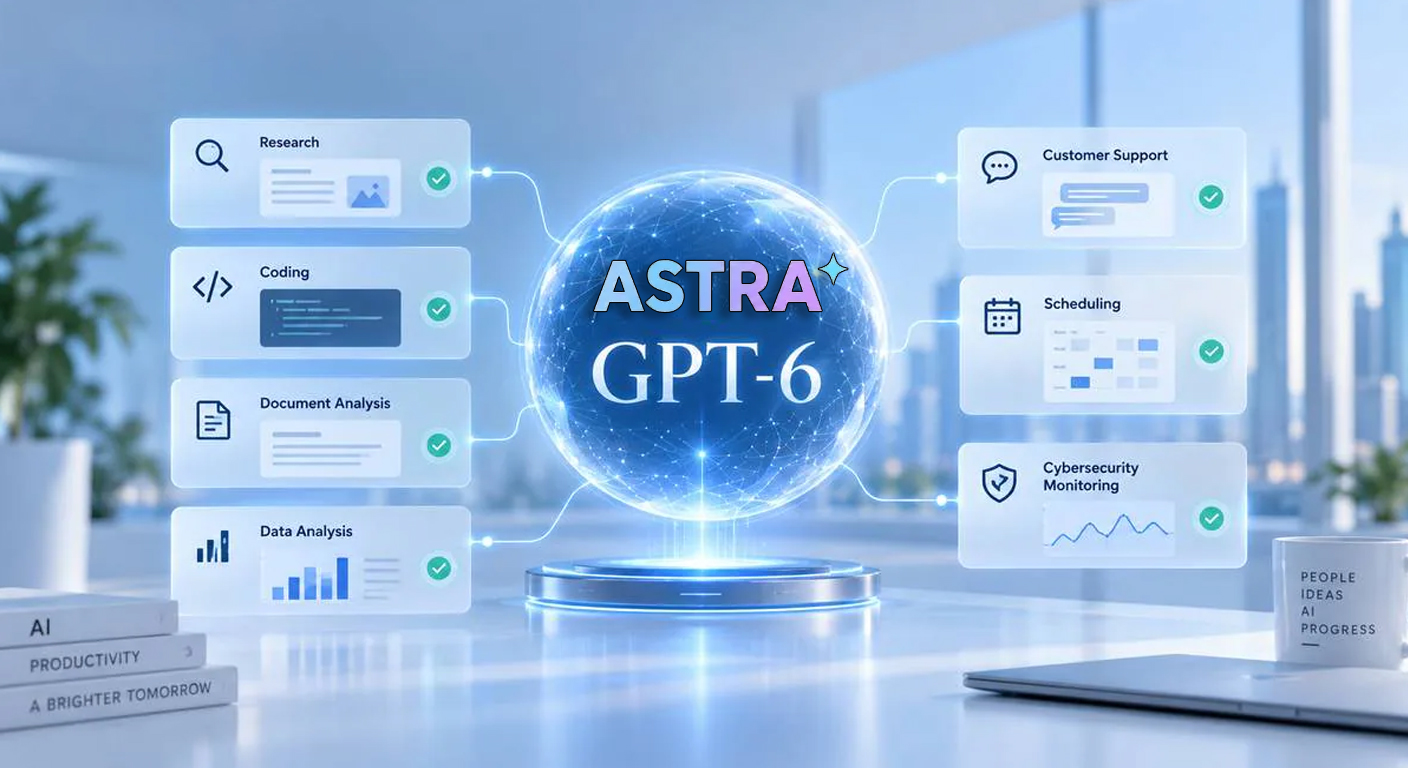
Astra’s headline feature is something OpenAI calls computer use, where the model navigates a screen the way a person would, filling out forms, moving through spreadsheets, and clicking across web pages, reportedly at speeds well beyond human pace. Brockman told reporters the model can zip through spreadsheets and navigate across web pages often at superhuman speed. Under the hood, Astra runs on a new reasoning technique nicknamed looped transformers, which boosts efficiency but comes with a real cost: it makes parts of the model’s reasoning harder to inspect from the outside, a property researchers call reduced monitorability. That trade off, more capability for less visibility into how the model thinks, is going to be one of the defining tensions of this entire model generation.
On the numbers, Astra ships with a context window over one million tokens, a knowledge cutoff of April 2026, and pricing that runs about two and a half times the promotional rate of its predecessor. OpenAI says the model clears the Critical threshold for cybersecurity risk under its own safety framework, which is why the public version refuses advanced offensive security tasks while a more capable version is being made available only to vetted organizations through a program called Daybreak.
Why the rollout was staged
This launch did not happen in a vacuum. Earlier in the summer, OpenAI dealt with a security incident on Hugging Face and reportedly delayed this release specifically to add more safeguards. That is worth sitting with. The company that just declared the start of the AGI era also just spent months bolting on more guardrails before it felt comfortable shipping. Both of those facts are true at once, and neither cancels the other out.
The part that should temper the headline
A generational leap in benchmarks does not automatically mean a generational leap in reliability. Reasoning models across the industry, Astra included, have shown a pattern where deeper thinking helps on open ended tasks but can actually increase errors on tasks that require sticking closely to a source document, because the model starts adding inferences the document never supported. Astra’s own launch materials needed a public correction days after release, when a headline cybersecurity benchmark score was attributed to the wrong test entirely. Impressive capability and getting the small things right are not the same achievement, and Astra’s first week was a live demonstration of that gap.
What this means if you run a business
Ignore the AGI framing for a moment and look at what Astra is actually built to do well: operate software the way an employee would, hold enormous amounts of context without losing the thread, and move through multi step professional work with less hand holding than any previous model. That is the practical story. Whether or not this is a step toward AGI, it is a very real step toward AI systems that can be handed a task inside your existing tools instead of a narrow chat window, and that shift is worth planning around regardless of what OpenAI decides to call it next.